How Round Top Reserve Came to Be
There is a story behind the 50 acres that became Round Top Reserve, and it begins long before the first home was built.
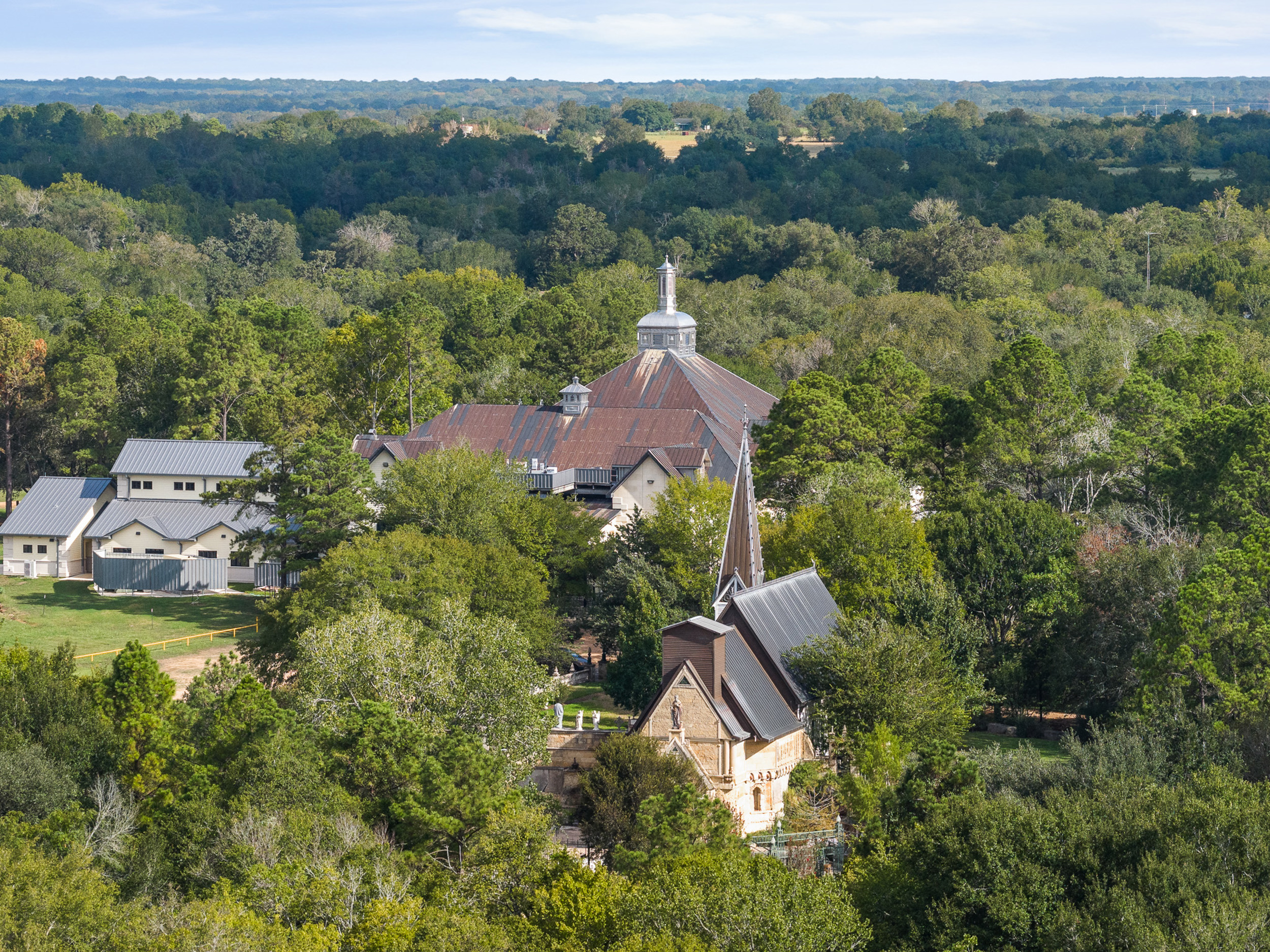
The property was once part of the land owned by the Round Top Festival Institute at Festival Hill, one of the places that has helped define the cultural character of Round Top for more than half a century. When Festival Hill decided to sell the property, its founder and artistic director, James Dick, was thoughtful about its future and considered several potential buyers.
Metropolitan Custom Homes ultimately purchased the property, with a vision for the land that respected its history and its connection to Festival Hill. For Metropolitan President Stuart Beken, the goal was never simply to develop 50 acres near Round Top. It was to create a thoughtfully planned residential community that felt appropriate to its setting and preserved some of the character already present on the land.
That vision became Round Top Reserve.
A Return to the Country
For Stuart, building in this part of Texas isn’t an introduction to country life. In many ways, it’s a return to it.
Stuart grew up in neighboring Colorado County before building a successful career as a custom homebuilder in Houston, particularly in the Memorial Villages. Over the years, Metropolitan has built homes in communities including Bunker Hill, Piney Point and other parts of Memorial, where thoughtful architecture, craftsmanship and an understanding of the individual property are essential to building well.
As Stuart considered expanding Metropolitan’s work beyond Houston, Fayette County was a natural fit.
Round Top, in particular, offered something different.
Its appeal has never been about creating something polished enough to erase its rural roots. Much of what makes Round Top special is precisely the opposite: old and new exist comfortably beside one another. Historic buildings, working land, serious architecture, art, music, antiques and design all somehow belong here.
The opportunity at Festival Hill offered a chance to create homes in that environment—and to do it in a way that felt connected to what was already here.
Fifty Acres With a History
The relationship between Round Top Reserve and Festival Hill is still visible if you know where to look. When Metropolitan began planning the approximately 50-acre property, the goal wasn’t to wipe the slate clean and impose a completely new identity on it. Instead, decisions about the community—from the platting of the homesites to the architecture of the houses and even some of the smallest design details—have been made with an awareness of the property’s setting and history.
Two tall metal structures at the entrance are a perfect example.
They stood there when the property belonged to Festival Hill. It would have been easy to remove them when development began.
Instead, they stayed.
Today they remain at the entrance to Round Top Reserve, a small but deliberate connection between what the property was and what it is becoming.
A Fence With a Familiar Feeling
Another connection is more subtle.
The fence that lines the street through Round Top Reserve was designed to be reminiscent of the fencing at Festival Hill.
It isn’t meant to copy it. Rather, it’s a visual reference to a neighboring property that has influenced the architecture and landscape of Round Top for decades.
Those details matter here.
A new community in Round Top shouldn’t feel as though it could have been picked up from somewhere else and dropped onto a piece of Texas land. It should belong to its surroundings.
That philosophy has guided the planning of Round Top Reserve from the beginning.
Choosing the First Homesite
Even the location of the first home at Round Top Reserve was intentional.
When the homesites were being considered, one of the reasons the lot at 115 Reserve Way stood out was its view toward Festival Hill.
From the property, you can see the cupola rising above the Festival Concert Hall.
It’s a relatively small detail until you stand there and see it.
The cupola in the distance creates a visual connection between the new home and one of Round Top’s most recognizable landmarks—and serves as a reminder of the land’s history.
So 115 Reserve Way became the site of the first home at Round Top Reserve.
Building Something New Without Forgetting What Was Here
There is always a tension when something new comes to a place with as much history and character as Round Top.
Growth is happening. New homes are being built. New businesses are opening. People are discovering the area and, increasingly, deciding they want a place here themselves.
But what makes Round Top desirable in the first place is worth protecting.
That is why the history of these 50 acres matters to us.
Round Top Reserve isn’t intended to recreate Festival Hill, nor should it. Festival Hill is singular—a place wit its own remarkable history, architecture and cultural legacy.
But being its neighbor, and having land that was once part of the Festival Institute property, comes with a responsibility to be thoughtful about what comes next.
That responsibility has influenced the way the land was platted, the way the homes are being designed and the details we’ve chosen to preserve along the way.
There will be new houses here.
There will be new neighbors.
And Round Top Reserve will continue to evolve.
But if we do this well, there will also always be reminders of what came before.
Sometimes it’s a view of a cupola in the distance.
Sometimes it’s the line of a fence.
And sometimes it’s simply choosing to leave something standing.